
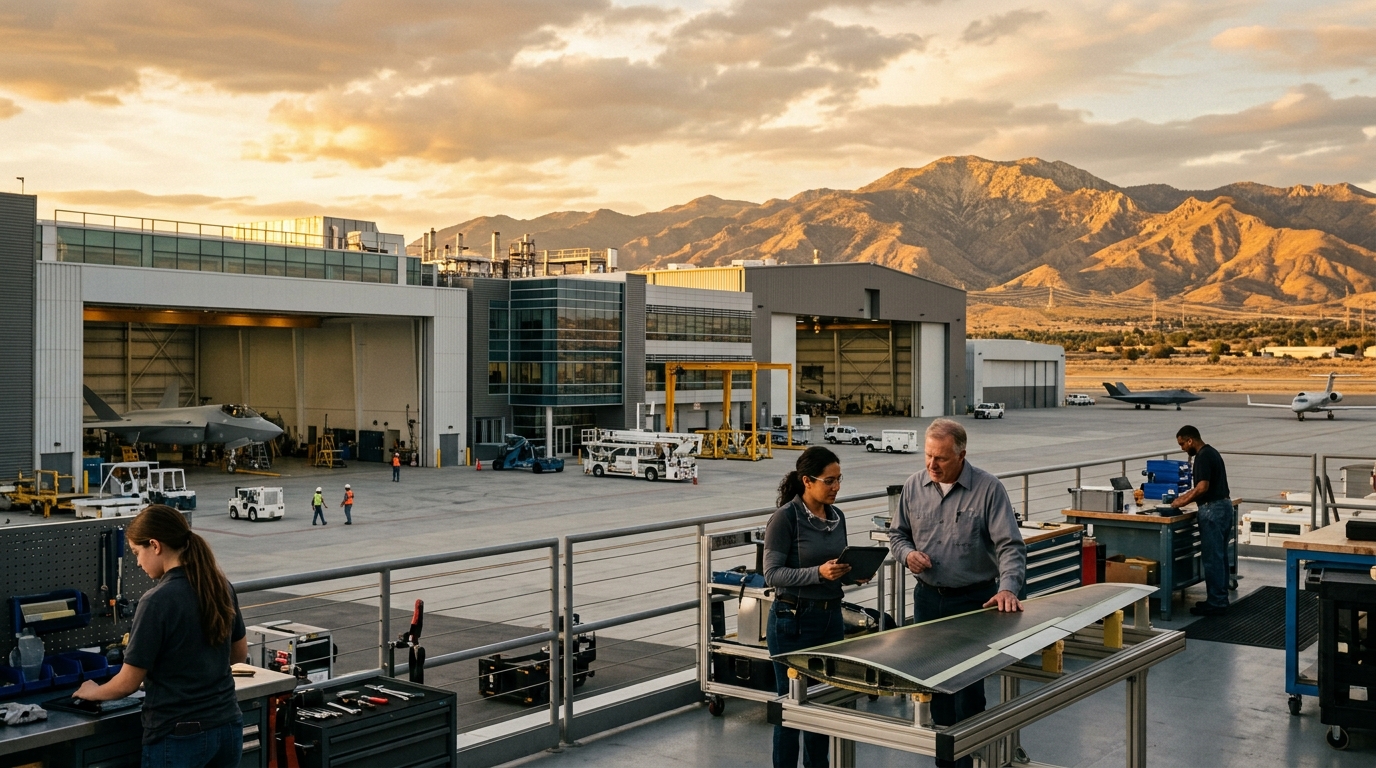
Palmdale’s identity has been connected to aerospace for generations, but in 2026 the industry is becoming an even bigger part of the city’s economic-development strategy. New manufacturing investment, expanded business incentives, infrastructure improvements and ongoing work at U.S. Air Force Plant 42 are creating fresh attention around what Palmdale calls its place in California’s “Aerospace Valley.”
The changes matter even if you never work directly on an aircraft. Aerospace growth can influence local jobs, commuting patterns, demand for suppliers, infrastructure investment and the types of businesses that choose to locate in Palmdale.
At the center of that activity is Plant 42, the major federal aerospace facility associated with companies including Northrop Grumman, Lockheed Martin and Boeing. Nearby businesses form part of a much larger supply chain involving precision manufacturing, engineering, components, logistics and specialized services.
For residents interested in living in Palmdale, understanding this part of the local economy provides useful context about where the city is heading. Here is what is driving Palmdale’s aerospace growth in 2026 and what the expansion could mean for employment and everyday life.
Why Aerospace Investment Is Accelerating in Palmdale
Palmdale is not attempting to build an aerospace industry from scratch. The city already has Plant 42, decades of aviation history, major aerospace contractors and a local workforce familiar with defense and advanced manufacturing.
The current strategy is to use those existing advantages to attract more of the companies that support major manufacturers. Instead of focusing only on the largest aerospace names, Palmdale is also targeting suppliers and specialized businesses that provide components, manufacturing capacity and services to the broader industry.
That approach became more aggressive in 2026 when the City expanded its Palmdale Aerospace Incentive Program, commonly called PAIP. The program is designed to encourage qualifying aerospace and defense businesses to lease space or construct new facilities in the city.
Palmdale Expanded Its Aerospace Incentive Program in 2026
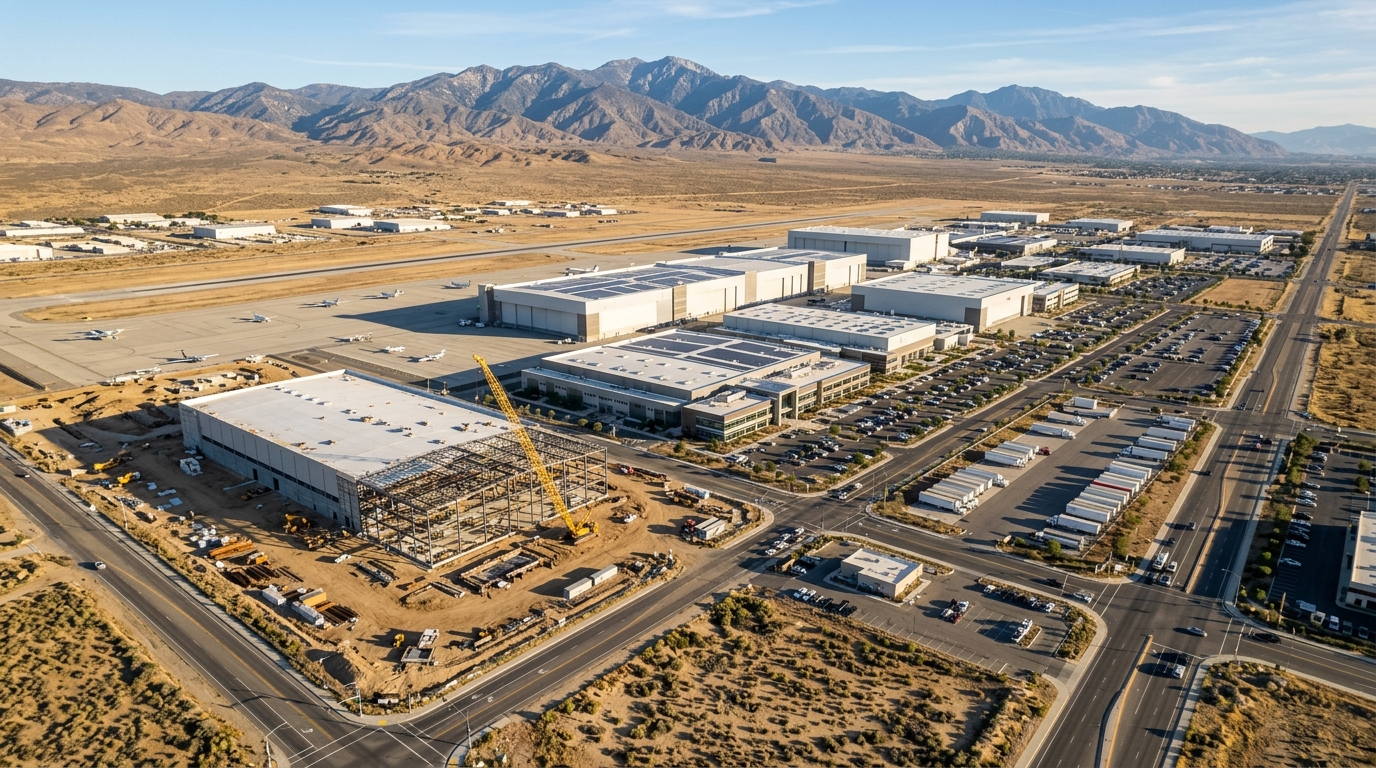
The City Council approved a major expansion of aerospace incentives in January 2026. For qualifying new-construction projects, the current program offers a $500,000 incentive divided into two project milestones of $250,000 each.
To qualify for the new-construction program, a business must create at least 50 new primary jobs and utilize at least 70,000 square feet of new construction. The company must also operate within the aerospace or defense supply chain and satisfy additional City eligibility requirements.
Lease projects are treated differently under the current program. Rather than a single fixed award, incentives are calculated using a formula that considers new jobs and leased square footage.
The goal is to bring aerospace suppliers closer to Plant 42
The logic behind the program is straightforward. Large aerospace manufacturing operations depend on a network of suppliers. When those suppliers are located closer to the main production facilities, parts and services may not need to travel as far through Southern California.
For Palmdale, attracting those companies also provides an opportunity to add skilled private-sector employment beyond the jobs already located at Plant 42.
The City’s strategy specifically targets businesses involved in the products and services required for aerospace and defense operations and manufacturing. That means the economic opportunity is broader than aircraft assembly alone.
Precision machining, specialized components, engineering support and other advanced-manufacturing activities can all become part of the local ecosystem.
Businesses interested in the current requirements can review the City of Palmdale Aerospace Incentive Program before making decisions based on older versions of the incentive.
AS Aerospace provides an early example of the strategy
One of the clearest examples is AS Aerospace. The company broke ground in October 2025 on a two-phase, 90,000-square-foot manufacturing facility in Palmdale and became the first project delivered through the City’s aerospace incentive program.
The company is relocating and expanding precision manufacturing and advanced component production from Santa Clarita to Palmdale. According to the City, the investment is expected to create approximately 150 jobs.
The facility is important because it demonstrates what Palmdale is trying to attract: companies that can operate within the aerospace supply chain while creating additional manufacturing employment inside the city.
Not every future project will necessarily look like AS Aerospace, and announced job totals should not be treated as guaranteed permanent employment. Construction, hiring schedules and business conditions can change. But the project gives residents a concrete example of the type of development the incentive program is intended to encourage.
Plant 42 Remains the Center of Palmdale’s Aerospace Economy
None of this growth can really be separated from U.S. Air Force Plant 42. The federal facility has played an important role in American aerospace history and continues to support advanced aircraft production and related work.
In March 2026, the City of Palmdale reported that approximately 12,000 Californians were working at Plant 42 and that the workforce was expected to grow to around 16,000 as additional work begins. Those numbers are City estimates and may change as programs and hiring evolve, but they illustrate the scale of the employment center.
Recent Air Force activity reinforces why Plant 42 remains strategically important. In September 2025, the second B-21 Raider test aircraft made its first flight from Plant 42 before flying to Edwards Air Force Base. The Air Force also stated that low-rate initial production of the B-21 was continuing from Northrop Grumman’s Plant 42 facility.
The B-21 program shows Palmdale’s role in next-generation aviation
Palmdale’s aerospace reputation is often associated with historic aircraft, but Plant 42 is not simply a heritage site. Current work connected to the B-21 Raider demonstrates that the facility remains involved in next-generation aerospace programs.
The B-21 is a new strategic bomber being developed for the U.S. Air Force. While much about modern defense programs is understandably restricted, official Air Force information confirms that test aircraft have launched from Plant 42 and that production work is taking place there.
That creates demand not only for workers inside major contractors but potentially for supporting suppliers, technical services and infrastructure around the facility.
Palmdale residents who want to explore the city’s aviation story from a visitor perspective can also include Joe Davies Heritage Airpark in a day of things to do in Palmdale. The public airpark displays aircraft connected to the area’s aerospace heritage near Plant 42.
What Aerospace Growth Could Mean for Palmdale Residents
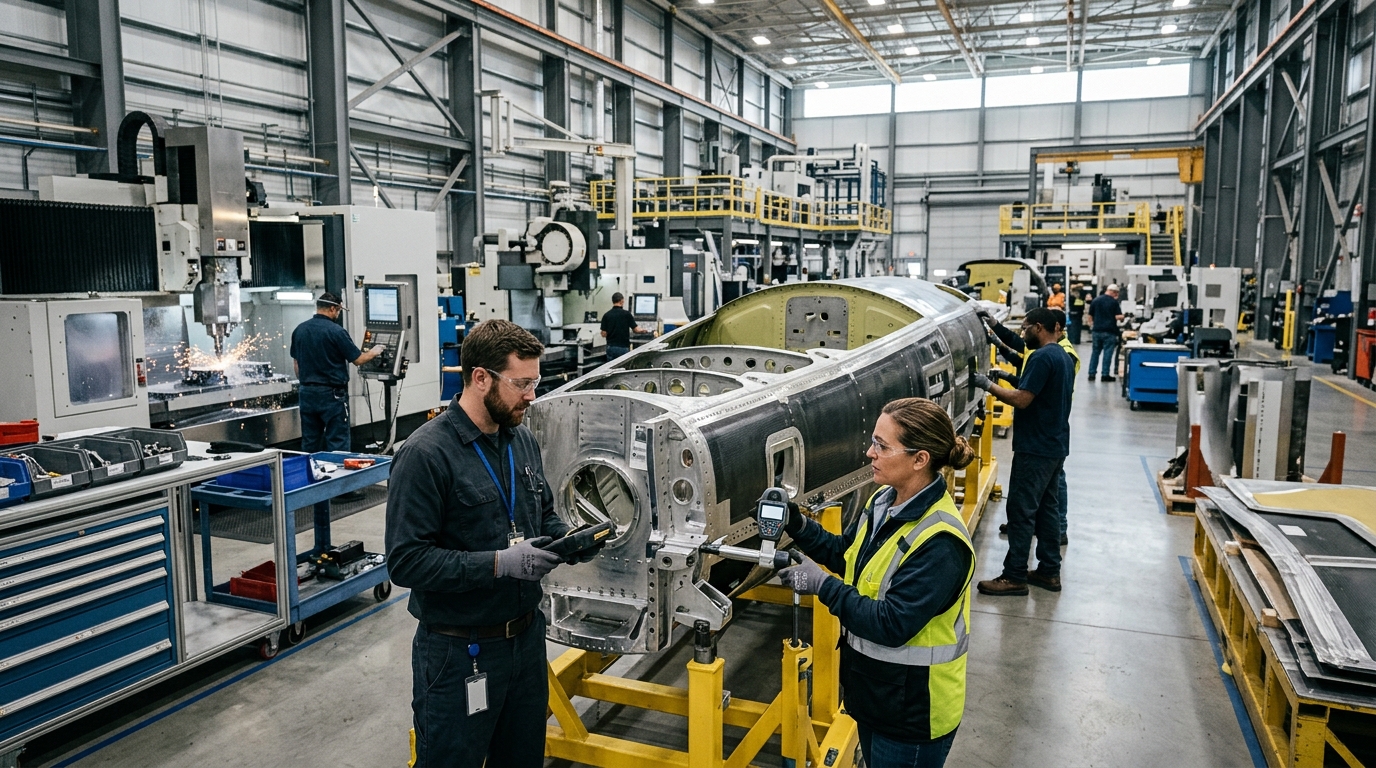
The most obvious potential benefit is employment. Aerospace and advanced manufacturing can create jobs in engineering, production, machining, quality control, logistics, administration, maintenance and many related occupations.
But employment growth alone does not automatically guarantee broader community benefits. Palmdale also needs transportation, housing, workforce training and public infrastructure capable of supporting a larger employment center.
That is why some of the city’s current aerospace strategy extends beyond direct business incentives.
In March 2026, Palmdale announced $2 million in federal funding to advance the Rancho Vista Boulevard Grade Separation project near the Plant 42 employment area. The planned project would separate roadway traffic from the Metrolink and Union Pacific rail crossing and improve access through an important corridor.
More Local Jobs Could Reduce Some Long-Distance Commuting
One of Palmdale’s longstanding quality-of-life issues is commuting. Many Antelope Valley residents travel significant distances toward other parts of Los Angeles County for employment.
If aerospace suppliers and advanced-manufacturing employers continue adding positions within Palmdale, some residents may gain opportunities to work closer to home. That does not mean commuting will suddenly disappear, but expanding the local job base can give households more choices.
The City has explicitly connected its aerospace incentives with the goal of creating skilled employment closer to where residents live. The infrastructure work around Plant 42 is similarly intended to improve access to one of the area’s largest employment centers.
Growth also increases the importance of infrastructure and local amenities
More jobs and business activity can create secondary effects. Employees need restaurants, services, housing, recreation and transportation. Suppliers need industrial space and road access. Families considering relocation care about parks, schools, entertainment and the overall quality of everyday life.
That is where economic development connects with the other changes happening around Palmdale. Investment is also appearing in public recreation spaces such as the expanded Sam Yellen Park and the ongoing Courson Park revitalization.
Meanwhile, local entertainment—including the Palmdale Amphitheater—and community events such as the Palmdale Night Markets contribute to the lifestyle side of a city trying to retain residents as well as attract employers.
There are also reasons to remain realistic. Aerospace and defense spending can change. Construction projects can be delayed. Hiring forecasts can move up or down. Incentive programs do not guarantee that every targeted company will relocate to Palmdale.
Palmdale’s strategy
For that reason, residents should separate confirmed developments from projections. AS Aerospace has broken ground on its Palmdale facility, for example, while its projected employment is still an expected outcome. Similarly, Plant 42’s workforce-growth figure is a City projection rather than a permanent guarantee.
What is clear in 2026 is the direction of Palmdale’s strategy. The city is using incentives, infrastructure investment and its proximity to Plant 42 to compete for more aerospace and defense supply-chain businesses.
That could strengthen one of Palmdale’s most distinctive economic advantages. Few Southern California communities can combine available industrial land, an established aerospace workforce and immediate proximity to a facility with Plant 42’s history and current role.
For residents, the story is worth following because aerospace growth is not isolated behind the gates of an industrial facility. It can influence where jobs are created, where roads are improved, what businesses open and how Palmdale positions itself over the next decade.
Continue exploring local life and neighborhoods, browse our Things to Do in Palmdale, or visit the Palmdale Living blog for more local development, recreation and community stories.